Techniques for a conceptual portrait of a man in Quebec
- Claude Gauthier
- May 8
- 4 min read
Conceptual male photography is a subtle art, a quest where each image becomes a reflection on identity, strength, and vulnerability. As a photographer, I often find myself exploring these nuances, seeking to capture not only appearance but also the profound essence of man. This visual journey, imbued with poetry and philosophy, invites immersion into worlds where body and mind converse.
Exploring the conceptual portrait of a man in Quebec: an artistic approach
In the heart of Montreal, the art scene abounds with opportunities to create portraits that transcend mere representation. The conceptual portrait of a man in Quebec City is part of this dynamic, blending cultural influences, natural light, and symbolism. It's not simply about photographing a subject, but about telling a story, evoking an emotion, and provoking reflection.
For this reason, I often favor environments that speak for themselves: alleyways with raw textures, minimalist spaces where light plays with shadows, or places steeped in history. These settings become silent partners, reinforcing the message I wish to convey.

Lighting is another key element. I like to work with strong contrasts, plays of shadow that sculpt the face and body, revealing unexpected details. Natural light, softened by a cloudy sky or filtered through a window, brings a gentleness that balances the raw power of the subject.
Essential techniques for creating a successful conceptual portrait of a man in Quebec
The success of a conceptual portrait rests on several technical and artistic pillars. Here are some practical tips that I regularly apply:
Choose a clear concept
Before even picking up the camera, it is crucial to define the message or emotion you wish to convey. This could be the duality between strength and fragility, the quest for identity, or even a visual metaphor.
Working on composition
Composition should guide the eye. I often use the rule of thirds, but I don't hesitate to break the rules to create more dynamic images. Negative space, for example, can reinforce the feeling of isolation or contemplation.
Use accessories and textures
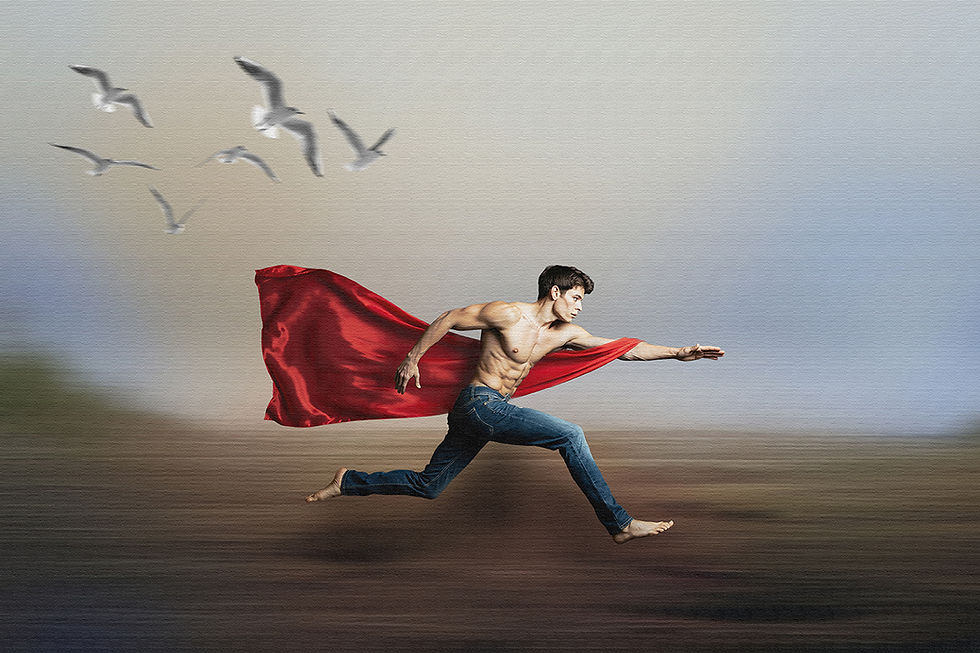
Elements such as fabrics, personal objects, or natural materials add depth and meaning. They become extensions of the subject, enriching the visual narrative.
Mastering pose and expression
Posture and gaze are powerful vehicles for emotion. I guide my models to adopt attitudes that reflect their personality or the chosen concept, while remaining natural.
Subtle post-processing
The image processing must remain true to the desired atmosphere. I opt for retouching that accentuates contrasts, textures, and colors without distorting the authenticity.
These techniques, combined with careful listening to the subject, make it possible to create portraits that resonate far beyond the image.
What are the 3 types of portraits?
In the field of photography, it is useful to distinguish three main types of portraits, each with its own specific characteristics and objectives:
The classic portrait
He emphasizes the faithful representation of the subject, often in a studio, with controlled lighting and a formal pose. The goal is to capture the outward appearance.
The environmental portrait
Here, the subject is photographed in their living or working environment. The setting provides clues about their personality, passions, or history.
The conceptual portrait
This type of portrait goes beyond simple representation. It uses symbols, staging, and visual effects to express an idea, an emotion, or a thought.
The conceptual portrait of a man, in particular, offers immense creative freedom. It allows for the exploration of universal themes such as masculinity, vulnerability, and inner strength, while playing with aesthetic codes.
Integrating symbolism and emotion into conceptual male photography
Masculine conceptual photography is not limited to visual aesthetics. It is also a language, a silent poetry that speaks to the heart. For this reason, I often incorporate symbols that enrich the narrative:
Natural elements such as wood, stone or water evoke strength, resilience or fluidity.
The contrasts of light symbolize the duality between shadow and light, strength and fragility.
Personal accessories tell an intimate story, a part of one's identity.
Emotion, on the other hand, manifests itself in the gaze, the posture, the momentary pause in breath. It is this emotion that creates the connection between the viewer and the image, that stirs the soul.

For me, each session is a collaboration, a dialogue where the model becomes a co-creator. Together, we explore inner territories, revealing facets often invisible at first glance.
Towards a conceptual photograph of a unique and authentic man
In a market where image is omnipresent, standing out with an authentic approach is essential. The conceptual photography of men that I offer aims to celebrate the uniqueness of each individual, to reveal what constitutes their inner richness.
This involves attentive listening, meticulous preparation, and sensitivity to the present moment. Each portrait then becomes a work of art, a visual testimony that invites contemplation.
I invite you to discover more about conceptual male photography and to consider these portraits as unique pieces, capable of enriching a collection or inhabiting a space with a strong and poetic presence.
Conceptual male photography is an endless journey, a quest where each image is a window into the soul. By exploring these techniques, I hope to inspire you to see beyond appearances, to feel the depth and beauty that reside in every portrait.


Comments